Ethereum co-founder Vitalik Buterin says artificial intelligence can help fix a major problem in decentralized governance. He proposes using AI tools to assist decision-making in decentralized autonomous organizations (DAOs). His ideas aim to make voting smarter, more inclusive, and more private. They come at a time when DAOs struggle with low participation and concentrated power.
Buterin shared his vision in a post on social platform X this week. He called out a serious flaw in DAO design: the limits of human attention. Today’s governance systems often expect individuals to handle many complex decisions. Most people cannot keep up. This leads to low turnout. It also leads to power falling into the hands of a few active voters.
The Attention Problem in DAOs
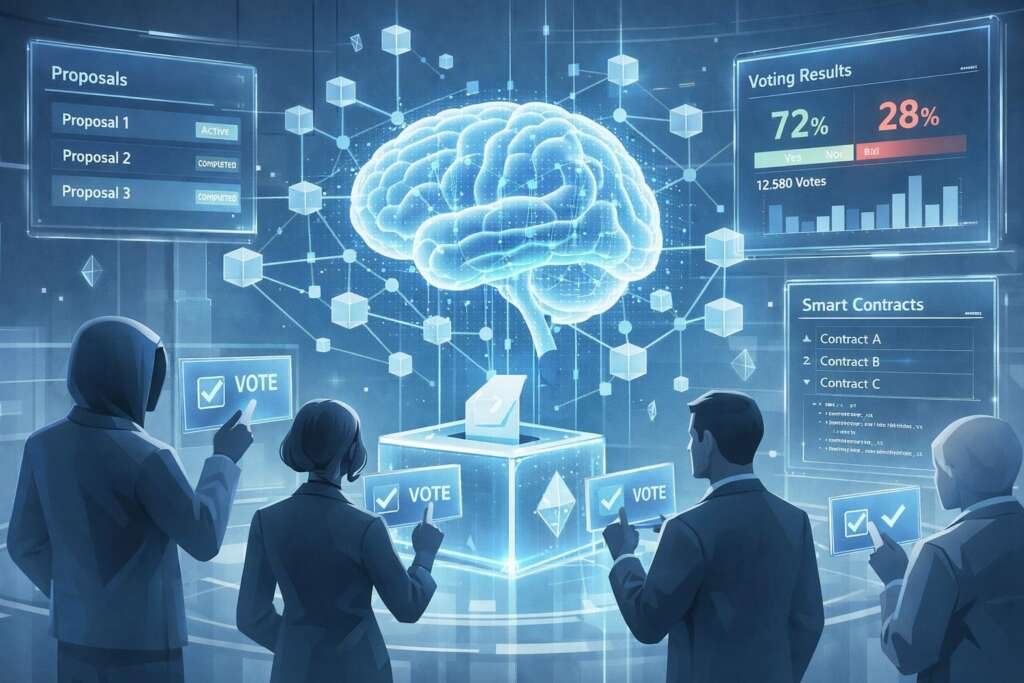
DAOs are blockchain-based groups governed by token holders. By design, they replace traditional leadership with decentralized decision-making. Members vote on proposals that steer projects, funds, and protocols.
But this ideal meets a practical hurdle. Vitalik highlights that humans have limited time and expertise. He says many DAO members cannot read, understand, and vote on every proposal. This creates a bottleneck. It also opens the door for delegation. When participants hand their votes to delegates, a small cohort gains outsized influence. That centralizes power – the opposite of what DAOs were meant to achieve.
Buterin wrote that this “attention scarcity” is one of the core reasons DAO governance fails to scale. He believes that a new approach is needed to keep decentralized systems effective.
What Buterin Proposes: Personal AI Agents
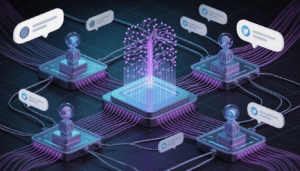
To solve this, Buterin suggests personal AI assistants powered by large language models (LLMs). These are not generic bots. They are personal agents designed to reflect each user’s values, past behavior, and voting preferences.
Here’s how it could work:
-
Users train their AI agent on their own writing and decisions.
-
The agent learns how the user thinks about proposals.
-
It can then vote on routine decisions on the user’s behalf.
-
Only important or uncertain matters are escalated to humans.
This approach shifts the burden off individual voters. Users no longer need to read every proposal. Their AI can advise or act based on their personal profile. If the agent is unsure about a vote, it asks the user for guidance.
Buterin says these agents should help increase participation without weakening decentralization. Unlike delegation, the AI does not grab power for itself. It merely acts as an informed proxy. The goal is to unlock participation that today sits dormant in most DAO token holders.
Preserving Privacy and Sovereignty
A big concern for Buterin is privacy. DAO governance sometimes involves sensitive information. For example, internal negotiations or strategic decisions may require discretion. But pooling this information publicly can be risky.
To tackle this, Buterin suggests technical safeguards. One idea is to use encrypted computing environments – like trusted execution environments (TEEs) or secure multi-party computation (MPC) – so that AI agents can see private data without exposing it to the public. Users could submit personal LLMs into a secure “black box” that only reveals the voting outcome, not the underlying private information.
This model also aligns with current research in cryptography and secure computing. Tools like zero-knowledge proofs already let systems verify data without revealing it. These techniques could help ensure that AI tools in governance respect user privacy and autonomy.
A New Role for Suggestion and Prediction Markets
Buterin also points to other AI-friendly tools that could reshape DAO governance. These include suggestion markets and enhanced prediction markets.
In a suggestion market, participants propose ideas and bet on their success. This can help bring forward high-quality proposals and filter noise. Prediction markets allow participants to wager on outcomes. When well-designed, these markets can reveal collective expectations and signal which proposals have broader support.
Buterin believes that combining AI tools with these market mechanisms could help DAOs make better decisions. AI, market incentives, and human values together might create a more efficient and trustworthy system.
Addressing the Power Concentration Problem
Today’s DAO governance often leads to power being concentrated in a few active voters. Buterin says this is a structural issue. When token holders don’t engage, they hand their votes to delegates. Delegation concentrates influence and undermines decentralization.
AI agents could change this dynamic. Instead of delegating to a few human delegates, token holders could rely on personalized AI models. These models can vote on many items, reducing the temptation to hand over voting rights. The result could be fairer representation and broader participation.
The Road Ahead for DAO Governance
Buterin’s proposal has sparked discussion across the crypto community. Some see it as a promising step toward more meaningful participation. Others caution that AI may introduce new risks if not carefully implemented.
One concern is how to ensure these AI agents truly reflect user intent. Another is how to prevent manipulation or bias in the models themselves. Yet Buterin’s emphasis on privacy tools and personal governance suggests he is aware of these dangers.
Still, his ideas push the conversation beyond simple token voting. They invite developers, researchers, and DAO communities to rethink how decentralized governance works in an era of rapid technological change.
Why This Matters
DAOs represent a bold experiment in digital democracy. They aim to let communities govern themselves without centralized authority. But practical limits, like human attention and governance fatigue, have slowed widespread adoption.
Vitalik Buterin’s AI vision may not solve every challenge. But it could help DAOs become more efficient, more inclusive, and more resilient. Whether personal AI agents become reality remains to be seen. But the idea marks a significant shift in how crypto innovators think about the future of decentralized governance.
In a world defined by rapid decisions and large communities, smarter governance tools could be exactly what decentralized systems need to thrive.