
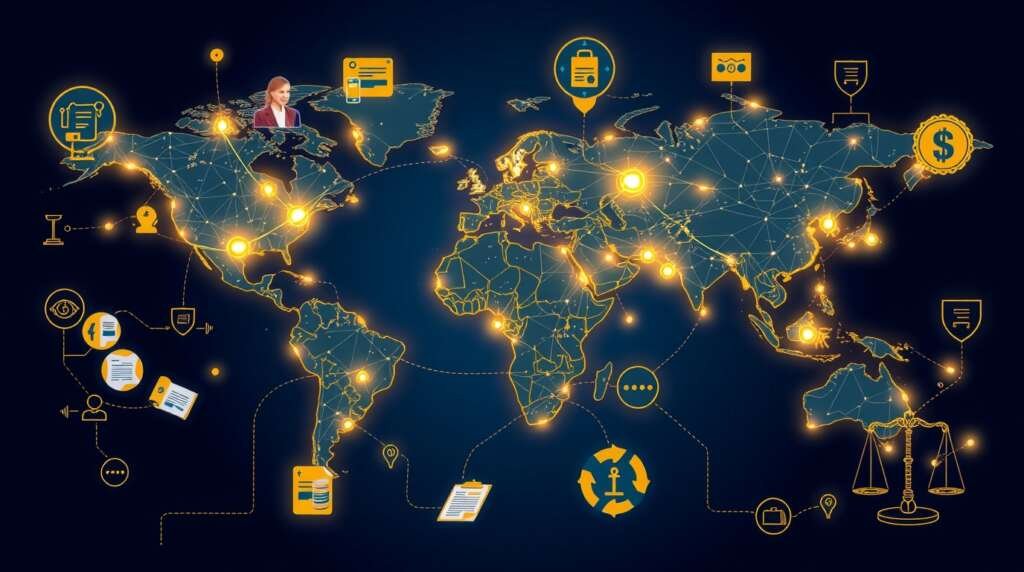
The credit world is changing fast. Once requiring multiple visits to the bank branch, dealing with loads of documentation and long waits for approval is now being replaced by mobile apps, automated scoring tools, and a lending process that happens almost instantly.
Driven by rapid innovation, digital lending is redefining how we borrow, save and repay. But it is doing so in a regulatory twilight zone, as the rules governing financial applications were originally developed for paper-based banking and not automated, data-driven credit platforms.
As fintech lenders and BigTech platforms extend credit across continents, regulators worldwide are forced into an urgent balancing act, figuring out how to preserve innovation while safeguarding consumers, data privacy, and financial stability.
This article explores how digital lending is transforming financial services globally, the regulatory gaps that are emerging, how various jurisdictions are responding, and what the future of oversight might look like. Let’s unpack every aspect of the challenge, from who counts as a lender to how algorithms are governed, and from protecting underserved borrowers to guarding against systemic risk.
What “digital lending” really means
When we talk about digital lending, we are talking broadly about any credit product that originates, underwritten, serviced or recovered through digital channels rather than traditional face-to-face banking. It could be a bank offering a personal loan through its mobile app, a fintech marketplace connecting borrowers to investors online, a buy now, pay later (BNPL) product embedded in an e-commerce site, or a social platform partner offering small loans to its users. What ties these models together is their reliance on data, technology and automation, often using non-traditional data sources, behavioural analytics and algorithmic decision-making.
These advances bring great opportunities, faster access, potentially lower costs, and greater inclusion. They also bring fresh regulatory fault-lines, clarity of responsibility, transparency of pricing, data protection, algorithmic fairness, fraud risk, third-party dependencies, cross-border enforcement and financial-stability concerns.
A Global tour of regulatory responses
China
The Chinese story is one of rapid growth followed by urgent regulatory correction. Over the 2010s, peer-to-peer (P2P) lending and online microcredit surged, but this boom exposed serious problems, including a high number of defaults, investor losses, and weakened oversight. Regulators moved decisively by tightening the licensing rules and requiring online platforms to work closely with banks to issue credit. As a result, many P2P platforms were wound down. The Chinese case shows how unrestricted digital credit growth can morph into systemic risk and widespread consumer harm.
India
In India, regulators are striving for a more balanced approach between innovation and protection. The Reserve Bank of India (RBI) rolled out its “Digital Lending Directions, 2025”, which consolidates earlier circulars and sets out obligations for lending apps and marketplace models. These rules require full disclosure of lender partners, uniform fee and interest-cost statements, and safeguard data usage and recovery practices. India’s framework is among the most advanced in emerging markets, designed to bring fintech agility under robust supervision.
United Arab Emirates
In the Gulf region, especially the Central Bank of the UAE (CBUAE) and its counterparts across the GCC, regulators are building digital lending frameworks from the ground up. In February 2024, the UAE issued regulations covering short-term lending and BNPL, demanding licensing, fee transparency and clear responsibilities for agents and platforms. The Gulf aims to become a fintech hub while upholding strong governance and consumer trust.
Europe & the United Kingdom
In Europe, the regulatory spotlight is on algorithmic fairness, data governance and alignment of new technology with established financial regulations. The European Banking Authority (EBA) and other EU bodies have issued directives and supervisory expectations for digital credit, while the UK’s Financial Conduct Authority (FCA) has integrated digital lending into its “Consumer Duty” and marketplace regulation frameworks. Rather than creating new rules for fintech credit, the approach here is to evolve existing rules to adapt to the digital age.
United States
Across the Atlantic, the US model relies less on new legislation and more on applying existing financial-services laws to digital lending. The Consumer Financial Protection Bureau (CFPB) has stepped up enforcement against opaque mobile app lending, discriminatory algorithmic scoring, and misleading terms. The focus is on transparency, fairness, and the risks of automated decision-making rather than on defining new categories of lenders.
Africa and Emerging Markets
Emerging markets face the dual challenge of encouraging digital credit to expand inclusion while ensuring that growth does not come at the expense of consumer protection. In Kenya, the Central Bank of Kenya (CBK) introduced its Digital Credit Providers Regulations in 2022, mandating licensing, pricing transparency, and data protection compliance. Countries such as Nigeria, Ghana, and the Philippines are following suit with registration requirements, consumer complaint frameworks, and fintech safeguards. For these markets, digital lending is both an opportunity and a risk.
Key regulatory challenges through a global lens
Defining the radius
One of the most fundamental issues is determining who falls under regulation. Traditional financial regulation assumed a lender, a borrower and a financial institution intermediary. Digital lending often blurs these lines; a fintech app may originate the loan, while a bank funds it, a marketplace may match borrowers and lenders, and a social platform may embed credit through a partner arrangement. Regulators must ask which entity is making decisions, who holds the risk, who services the loan, and who collects repayment. Without clarity, regulatory gaps emerge, consumer protection weakens, and systemic risk lodges unseen.
Consumer protection and transparency
Across many countries, complaints about hidden fees, aggressive collections, and digital-only communications have spurred regulatory scrutiny. Digital lending often targets users with thin credit histories, and the cost of credit may be higher or less obvious than consumers expect. Regulators now require standardised disclosures of the total cost of credit (interest, fees, penalties) and impose rules around how collection practices may operate. The consumer-protection challenge is global: some markets set price caps; others focus on fairness and transparency; all recognise that convenience should not override clarity.
Data and privacy issues
Digital lenders tap vast datasets, including mobile-phone behaviour, geolocation, online shopping patterns, and social networks. While this expands reach, it also raises deep privacy, profiling and consent questions. Financial supervisors may require access to borrower data for oversight, but privacy regulators demand minimisation of collection and explicit consent. The result is tension: financial inclusion versus data rights. Cross-border data flows add another layer of complexity, especially when lenders operate across jurisdictions with differing privacy regimes.
Algorithmic fairness and model risk
Automation in credit decisioning brings efficiency but also the risk of bias and discrimination. Machine learning models may inadvertently embed proxies for race, gender, or socio-economic status. Regulators in advanced markets now demand model validation, human oversight, explainability and regular testing for disparate outcomes. For global lenders, compliance means that a model acceptable in one jurisdiction might face regulatory challenge in another. Ensuring fairness, transparency and accountability across borders is emerging as a key governance hurdle.
Onboarding, identity, fraud and AML/KYC
Remote lending brings accessibility but also fraud risk. Synthetic identities, digital wallets, mobile-only accounts and money-mule networks challenge traditional KYC (Know Your Customer) and AML (Anti-Money Laundering) regimes. Regulators are exploring tiered verification, digital identity frameworks, transaction-monitoring thresholds, and ongoing surveillance. The trade-off is stark: overly rigid verification may exclude underserved borrowers; too lax a regime may allow systemic abuse.
Third-party dependencies and cloud risk
Digital lenders rarely own all parts of the value chain. They outsource underwriting platforms, analytics, cloud infrastructure, and customer service functions. This concentration on shared vendors or cloud providers introduces operational risk and potential systemic exposures. Supervisors worldwide are increasingly concerned about vendor concentration, exit-plan readiness, data-sovereignty requirements and resilience testing. The question becomes not just “Is the firm compliant?” but “If a key provider fails, what happens to borrowers and the system as a whole?”
Cross-border and regulatory fragmentation
One of the trickiest issues in digital lending regulation is cross-border enforcement. Mobile-app lenders may serve consumers in jurisdictions where they hold no licence; payment rails may move funds across borders instantly; data flows transcend national boundaries. Licence requirements, interest-rate caps, consumer rights laws, and data protection regimes differ greatly across countries. Coordinated supervision, shared data, and joint enforcement are still rare. As a result, regulatory arbitrage remains a real threat, and enforcement lags behind business expansion.
Financial stability and growth spurts in credit
Digital credit can scale at lightning speed, especially in emerging markets with large underserved populations. But rapid growth entails risks such as portfolio concentration, correlated defaults, liquidity stress, and contagion. China’s P2P sector collapse illustrated how unchecked digital-credit growth can be destabilising. Supervisors increasingly insist on timely data reporting, stress testing of digital loan portfolios, and macro-prudential backstops for high-growth lenders. The regulatory dialogue is shifting from “Will digital credit expand?” to “What happens when it expands too fast and without guardrails?”
Supervisory capability and enforcement
Even the smartest rules are ineffective if the regulator lacks the technical tools to enforce them. Monitoring AI models, auditing data flows, testing cloud resilience, and tracking cross-border apps demand specialised skills. Some jurisdictions are creating fintech supervision squads, regulatory sandboxes, data analytics platforms, and public registries of authorised lenders. But the gap remains large, especially in smaller or emerging-market regulators. Building capacity is a long-term task and is now as critical as policy design.
A converging regulatory toolkit
Despite the wide variety of markets and regulatory frameworks, a shared toolkit for digital lending oversight is emerging. Regulators are increasingly favouring frameworks that focus on a firm’s economic function rather than its legal label. They use tiered licensing depending on risk and scale, require standard disclosures of total credit cost, impose strict data-governance rules (purpose limitation, consent, audit trails), mandate algorithmic-model governance (bias testing, explainability, human oversight), calibrate KYC/AML obligations to avoid exclusion, monitor infrastructure risk through outsourcing rules, require regular supervisory reporting and enforce sanctions or licence revocations when firms misbehave. International cooperation via (MoUs), fintech sandboxes and data-sharing mechanisms is also becoming more common.
Examples of this toolkit are evident in India’s 2025 digital lending directions, the UAE’s short-term lending regulation, Kenya’s digital credit provider regulations, and the EU’s CCD2 and DORA. Many of the details differ, but the underlying architecture is converging globally.
What does this mean for lenders operating internationally
For fintechs and traditional lenders venturing into global markets, the message is clear: digital lending is no longer a compliance afterthought. It demands rigorous strategic alignment. Lenders must map out their value chains and ask: Who underwrites the credit? Who bears the risk? Where are the borrowers located? What data is collected and how is it used? They must implement disclosure regimes suited to each jurisdiction, ensure data frameworks meet the strictest applicable standard, build algorithm-governance and model-audit functions, embed KYC/AML controls across borders, monitor vendor and cloud-dependencies and provide consumer-friendly grievance and redress systems. In short, compliance now is a competitive advantage, not merely a cost centre.
Emerging questions and risks
Looking ahead, the next decade of digital lending will test the very limits of regulatory adaptability. As credit platforms increasingly operate without borders, it’s becoming harder for regulators to enforce rules across different countries. When a lender is based in one place but serves borrowers elsewhere, traditional licensing and oversight tools don’t work as well.
Regulators must now coordinate through cross-border supervisory networks, shared data registries, and enforceable bilateral frameworks to ensure accountability for offshore lenders. At the same time, the rapid adoption of alternative-data models and generative AI introduces new fairness and transparency risks.
Biased data can make credit algorithms reinforce discrimination, and generative AI adds opacity, making their decisions harder to explain or audit.
Regulators must embed fairness checks, decision trails, and independent reviews to ensure innovation respects equity, privacy, and consumer protection.
Equally pressing are the structural and systemic risks beneath the surface. Heavy reliance on global cloud and data vendors creates concentrated operational exposure if a single provider fails, thousands of digital lenders could face simultaneous disruptions across markets. Supervisors must therefore push for multi-cloud resilience, vendor-continuity planning, and transparency over third-party dependencies.
Yet even as oversight tightens, regulators cannot lose sight of financial inclusion. Excessively stringent rules risk pushing vulnerable borrowers back toward unregulated “shadow lenders,” while under-regulation exposes them to exploitative debt cycles. The future of digital credit will depend on finding an equilibrium in which innovation, inclusion, and integrity coexist through adaptive regulation, coordinated supervision, and technology-neutral policy design. Ultimately, the strength of global oversight will be judged not by its restrictions, but by its ability to evolve as fast as the systems it seeks to govern.
Conclusion
Digital lending offers tremendous promise: faster credit, broader inclusion, innovative underwriting. But the promise can be fragile if regulatory frameworks lag. Globally, jurisdictions that succeed will be those that marry innovation with accountability, adapt supervision, embed consumer protection, and ensure systemic resilience. Those that don’t risk seeing digital-credit bubbles, exploitative practices and consumer backlash. The story of digital lending is just beginning, and its regulation must be as global, dynamic and forward-looking as the innovation it seeks to govern.