
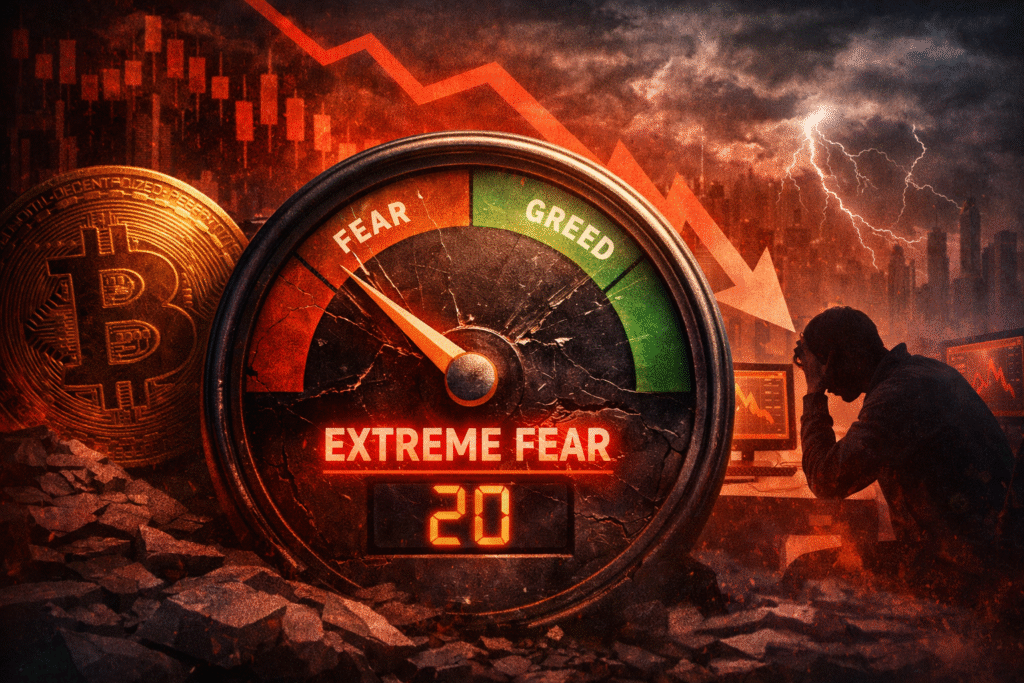
The cryptocurrency market’s mood remains deeply pessimistic, as the widely followed Crypto Fear & Greed Index stays entrenched in the extreme fear zone for the 14th consecutive day. This prolonged streak underlines mounting concerns among traders and investors, even as leading digital assets like Bitcoin trade far above their historical lows.
Market observers say this sentiment slump reflects broader unease across crypto markets, leaving many participants cautious and disengaged. In this report, we unpack what the sentiment data shows, explore the possible reasons behind sustained fear, and discuss what it could mean for the weeks ahead.
What the Fear & Greed Index Shows
The Crypto Fear & Greed Index is a popular tool used to measure market sentiment on a scale from 0 to 100. Lower scores indicate pervasive fear, while higher scores signal rising greed and confidence. According to the latest data, the index fell three points to a score of just 20 out of 100, keeping it deep within the extreme fear bracket.
This two-week stretch- from December 13 through December 26- marks one of the longest sustained periods in extreme fear since the index was introduced by Alternative.me in 2018. The current levels are even lower than during the shock FTX collapse in late 2022, when confidence across crypto markets plummeted sharply.
Sentiment gauges like this are closely watched because they reflect how investors emotionally approach the market. Extreme fear often emerges when traders are uncertain about future price direction, and selling pressure outweighs optimism.
Why Fear Has Deepened
Macro and Geopolitical Headwinds
One major factor dragging down sentiment is renewed anxiety around global tariffs and trade tensions. After a large bearish move triggered by fresh U.S.- China tariff fears in early October, nearly $500 billion was wiped from the crypto market, dampening confidence among investors.
This backdrop has left market participants wary of volatility and further price declines. Traders often interpret such macroeconomic stress as a signal to stay on the sidelines or reduce exposure to risk assets like crypto.
Federal Reserve Policy Risks
Second, expectations around U.S. monetary policy are adding to the unease. Many traders had hoped for rate cuts in early 2026, but recent projections suggest the Federal Reserve may pause or delay easing its policy, diminishing one potential source of liquidity support for risk-oriented markets.
Some analysts, including Jeff Mei of crypto exchange BTSE, have warned that if rates remain elevated, Bitcoin could drop to as low as $70,000- well below current trading ranges.
Retail Disengagement
Data from analytics firms suggest that crypto search volume and social media activity have significantly dropped, especially among retail traders. Retail interest across Google trends, Wikipedia views, and internet forums has fallen to levels typically seen in bear markets.
This reduction in engagement underscores a broader chill in investor participation: fewer newcomers are entering, and many existing retail holders have stepped back after being battered by past market cycles and failed narrative plays like memecoins and stalled altcoin rallies.
What This Means for Bitcoin and Altcoins
Bitcoin Market Reaction
Despite the fear, Bitcoin’s price remains trading well above key bear-market lows, currently hovering around the mid-$80,000s to low-$90,000s.
Still, that price level represents a nearly 30% drop from its all-time high set earlier in October 2025, which adds context to the prevailing nervousness.
Prolonged bearish sentiment does not necessarily guarantee further price drops, but it does suggest that market momentum is lacking bullish conviction, which can slow or stall recoveries—even when fundamental indicators appear sound.
Altcoin Market Reaction
Altcoins have faced even sharper declines in recent months, with many posting deeper losses than Bitcoin. When fear dominates, investors typically favor liquidity and safer assets, which historically benefits Bitcoin over smaller tokens.
In past cycles, extended fear readings have occasionally coincided with local bottoms, followed by rebounds once negative sentiment exhausts itself. But analysts warn that sentiment data should be used alongside technical and fundamental analysis – not as a standalone signal.
Contrarian Views: Opportunity or Danger?
Some traders interpret extreme fear as a contrarian signal- a possible indicator that markets are oversold and could be poised for a reversal. According to sentiment theory, when fear peaks, the number of sellers thins out, potentially creating conditions for strong upward moves if demand returns.
However, this contrarian view comes with caveats. Fear readings can remain elevated for extended periods, and sentiment alone does not guarantee price rebounds. Timing markets based solely on fear indicators has historically proven difficult and risky.
Veteran investors often stress that sentiment tools are most effective when used in combination with traditional indicators like trading volume, moving averages, and macroeconomic signals.
Looking Ahead
As markets head into early 2026, several factors will likely shape sentiment:
Federal Reserve policy decisions, which could either alleviate or reinforce investor anxiety.
Retail engagement trends, including whether traders return as prices stabilize or fall further.
Regulatory developments that might inspire institutional participation or trigger caution.
Given Bitcoin’s historical cycles, bad sentiment has sometimes preceded strong rebounds-but not always. Traders and investors will be watching closely for signals that fear has peaked and opportunity is emerging.
Crypto markets remain in a state of extreme fear for the 14th straight day, a rare and sobering stretch that reflects deep market uncertainty. This persistent sentiment highlights the challenges facing the industry-from macroeconomic headwinds to waning retail involvement.
Whether this prolonged fear marks a market bottom or simply a pause in an ongoing trend remains to be seen. What is clear is that traders and analysts alike will be watching sentiment data closely as markets evolve in the weeks and months ahead.