
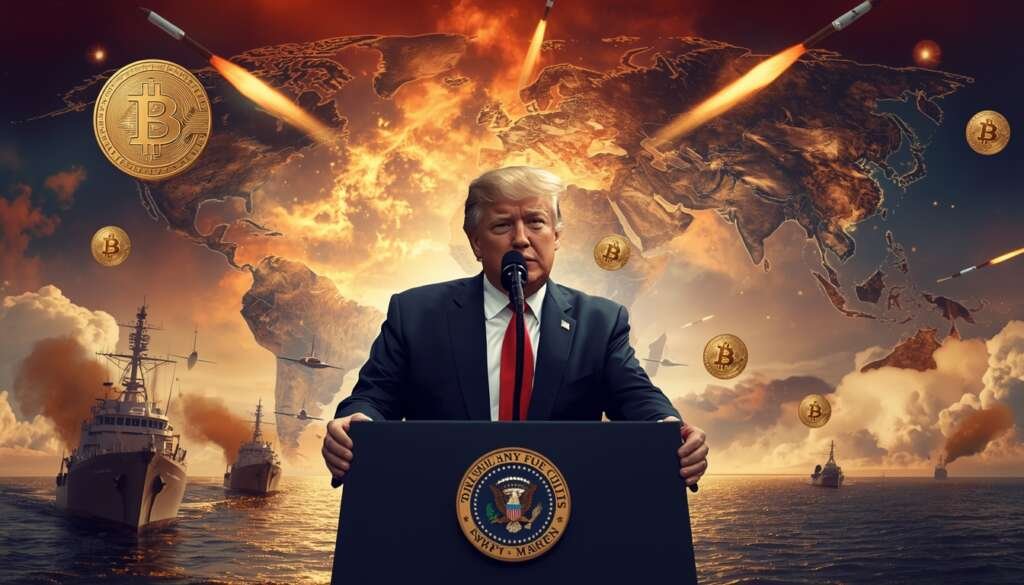
Global cryptocurrency markets staged a notable rebound after U.S. President Donald Trump delayed a key deadline tied to escalating tensions with Iran, offering investors a brief window of optimism amid ongoing geopolitical uncertainty.
The shift in tone, combining hardline rhetoric with signals of diplomacy- helped stabilize risk assets, particularly Bitcoin and other major cryptocurrencies, which had been under pressure in recent days due to fears of further conflict in the Middle East.
A Sudden Shift in Geopolitical Tone
Markets had been rattled by rising tensions surrounding the Strait of Hormuz, a critical oil shipping route. Trump had previously issued a strict ultimatum to Iran, warning of potential strikes on infrastructure if the waterway was not reopened. That deadline, however, was extended, signaling a possible pause in immediate military escalation.
At the same time, Trump suggested that diplomatic discussions were ongoing and that a deal could be reached quickly. This dual messaging- threats paired with negotiation- created a complex but ultimately stabilizing effect on financial markets.
Investors interpreted the delay as a sign that conflict might be avoided, at least in the short term. That perception was enough to trigger a rebound across several asset classes, including cryptocurrencies.
Bitcoin Leads the Crypto Recovery
Bitcoin spearheaded the recovery, climbing back toward the $69,000–$70,000 range after dipping amid earlier uncertainty. The broader crypto market followed suit, with total market capitalization rising by roughly 2–3% in a single day.
The rebound was also fueled by a wave of liquidations in short positions. Data showed that hundreds of millions of dollars in bearish bets were wiped out, accelerating upward price momentum as traders rushed to cover positions.
This kind of rapid reversal highlights how sensitive crypto markets remain to macroeconomic and geopolitical developments. Unlike traditional assets, cryptocurrencies often react instantly to shifts in sentiment, making them both volatile and highly responsive.
From Risk-Off to Risk-On Sentiment
In the days leading up to the rebound, markets had adopted a “risk-off” stance. Investors moved away from volatile assets as fears of a broader conflict intensified. Bitcoin, for example, had fallen toward the mid-$60,000 range as geopolitical risks mounted.
However, Trump’s decision to delay action changed the narrative. The possibility of de-escalation encouraged investors to re-enter riskier assets, including crypto.
This pattern is not new. Earlier in March, a similar postponement of military action led to a sharp rise in Bitcoin prices, with the cryptocurrency briefly surpassing $70,000 as optimism returned to markets.
The repeated pattern underscores a key dynamic: crypto markets are increasingly tied to global macro events, behaving in ways similar to equities during periods of geopolitical stress.
Oil Prices and Inflation Concerns Remain
Despite the crypto rebound, broader economic concerns have not disappeared. Oil prices remain elevated due to ongoing uncertainty in the Middle East, with crude trading above $100 per barrel in some cases.
Higher energy prices raise fears of renewed inflation, which could weigh on both traditional and digital assets over time. Analysts warn that sustained geopolitical tension may continue to inject volatility into markets, even if short-term relief rallies occur.
In fact, some experts argue that crypto’s recent gains may be temporary, driven more by sentiment than by fundamental improvements.
Ceasefire Hopes Add to Market Optimism
Adding to the positive sentiment are reports of potential ceasefire discussions involving the United States, Iran, and regional mediators. While no agreement has been finalized, the mere possibility of a diplomatic resolution has helped calm markets.
These developments have reduced immediate fears of supply disruptions in global oil markets, which in turn has supported risk assets.
However, uncertainty remains high. Conflicting statements from both sides mean that negotiations could break down at any moment, potentially reversing recent gains.
Crypto as a “Real-Time Sentiment Indicator”
The latest market movements reinforce the idea that cryptocurrencies are becoming a real-time barometer of global sentiment.
Analysts increasingly describe Bitcoin as a “headline-driven asset,” reacting quickly to political developments and shifting narratives.
This role has grown more pronounced as institutional participation in crypto markets has increased. Large investors now treat Bitcoin similarly to other risk assets, adjusting positions based on macroeconomic signals rather than purely technical factors.
As a result, geopolitical events- once considered peripheral to crypto- now play a central role in price movements.
Volatility Likely to Continue
While the recent rebound has provided relief to investors, few expect stability to return anytime soon.
The combination of geopolitical tension, rising oil prices, and uncertain monetary policy creates a challenging environment for markets. Crypto, with its inherent volatility, is likely to remain particularly sensitive to these factors.
Short-term rallies may continue as headlines shift, but sustained growth will likely depend on a clearer resolution to the conflict and broader economic stability.
The rebound in crypto markets following Trump’s decision to delay the Iran deadline highlights the growing intersection between geopolitics and digital assets.
Bitcoin and other cryptocurrencies surged as investors interpreted the delay as a sign of possible de-escalation. However, underlying risks remain, including inflation pressures and ongoing uncertainty in the Middle East.
For now, crypto markets appear to be riding a wave of cautious optimism. But as recent events have shown, sentiment can change quickly- and with it, the direction of the market.