
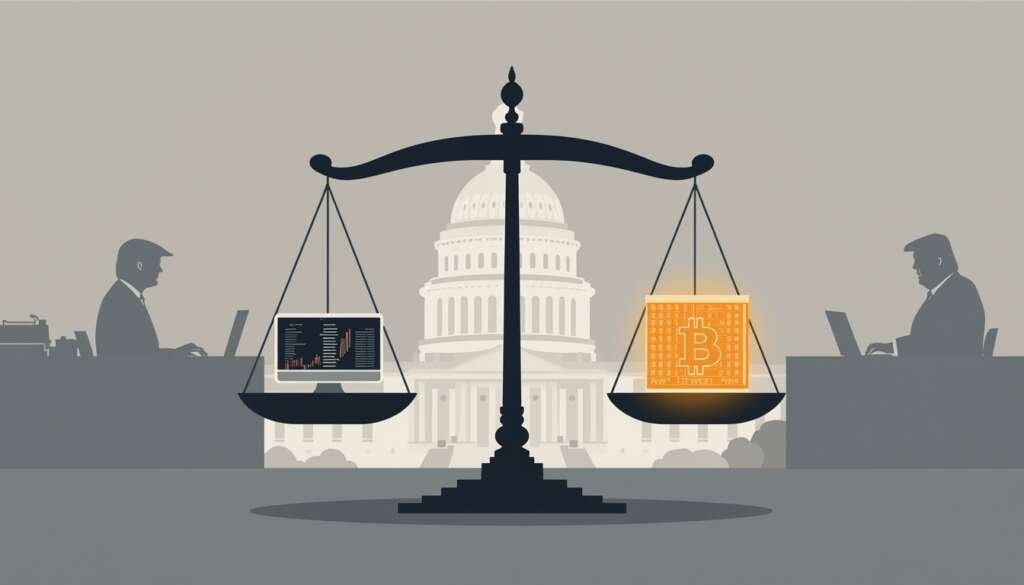
Insider trading allegations have an impact that extends well beyond the alleged wrongdoing of just one person. They have significant ramifications when connected to high-profile trading firms such as Jane Street. Therefore, in addition to typical enforcement actions, they raise broader issues of market integrity, political power, regulatory jurisdiction, and the changing financial landscape.
Insider trading is among the most frequently prosecuted types of securities crimes in the U.S. and many other countries. Despite the media’s frequent use of the phrase “insider trading,” it is used incorrectly and vaguely to refer to trades made by someone who is in a decision-making position or has access to non-public information and profits from such trades. While it may be true that someone in those circumstances has access to some amount of non-public, material information, it must also be true that he or she had a legal obligation not to misuse that information.
Hence, the criminal law defines insider trading in a much more complex, sophisticated manner. It does not make it a crime for someone just to be in possession of insider information. Rather, it is a crime to breach your duty to another party by trading on that material, non-public information.
The situation is further complicated when a political administration is involved. Whether Donald Trump’s or any other administration, the government’s decisions impact the market. If a trader has advance knowledge of any non-public piece of policy-related information and trades on that knowledge, he or she may be exposed to considerable regulatory scrutiny. Similar principles are becoming more common with respect to the crypto market. Token listings, protocol upgrades, regulatory announcements, and exchange decisions have been known to change the value of a token in a matter of minutes.
To provide context for the seriousness of the accusations, it is important to review the legal definition of insider trading, its application in traditional markets, its evolution in crypto markets, and why enforcement has become more aggressive in recent years.
What Insider Trading Actually Means in Law
The personality of “insider trading” is clear on its surface. An insider uses an organization’s confidential information to make trades that others don’t have the same level of access to. But this picture doesn’t tell the whole story.
Generally speaking, “trading as a result of using MNPI (Material Non-Public Information)” is the most common way (but not the only way) to violate Section (10)(b) of the Securities Exchange Act of 1934 and SEC Rule 10b-5 which both prohibit fraud and other similar activities related to the buying and selling of shares of stock or any other financial obligation.
There are three important factors that help determine whether an insider trading transaction is illegal.
First, the information must be considered material. This means that a reasonable investor would use this information to decide whether or not to invest in the company. Examples of material information include a merger or acquisition of the company, a regulatory approval, a large government contract, and the commencement of an enforcement proceeding.
Second, the information must be considered non-public. If the information has not been widely distributed to the general investing public, then it will also be considered non-public.
Third, the insider who executes the trade must have breached a duty of trust by trading on the information. This is typically the most legally difficult footing on which to prove a case of insider trading. The fact that someone possesses non-public information does not automatically mean they are engaged in insider trading when trading on it.
A violation of the law occurs whenever information is obtained in the context of a fiduciary relationship or another relationship involving trust and then used in violation of that relationship.
The breach-of-duty requirement is why insider trading law often revolves around issues of fiduciary relationships, employment agreements, confidentiality agreements, or misappropriation of information.
The Classical and Misappropriation Theories
Two main legal theories have been developed by courts to prosecute insider trading: the classical theory and the misappropriation theory.
According to classical theory, corporate insiders such as executives, directors, or employees may not trade in the securities of their company based on material, non-public information. They have a fiduciary duty to their shareholders that prohibits them from doing so. For example, if a chief financial officer of a company learns that earnings will fall substantially below expected levels and sells shares of that company before that information is made available to the public, this could potentially result in liability for insider trading.
The misappropriation theory is much broader and applies to anyone who misappropriates or improperly uses material, confidential information obtained from a source with whom that person had a duty of trust. For example, if an attorney, who has been entrusted by the company with material, confidential information relating to a merger, discloses that information to a friend and that friend trades on that information, both parties can be liable for having engaged in insider trading. In addition, the friend (the ‘tippee’) can also be liable if he or she knew, or should have known, that the information was disclosed improperly.
These doctrines have been shaped through decades of Supreme Court decisions, including landmark cases such as Dirks v. SEC and United States v. O’Hagan.
When Politics Enters the Equation
The decisions made by government policies can drive financial markets. Changes such as tariffs, sanctions or regulations, fiscal stimulus packages and enforcement actions can greatly increase or decrease values for all companies in any given industry.
Usually, when there is an insider trading allegation involving the presidential administration, there is attention on whether or not the trader was ahead of the announcement of these decisions to trade before the public had a chance to act upon that information. If the insider information was leaked to the trader, then there would be an increased chance of being prosecuted for using that inside information.
On the other hand, just because the trader was able to guess what would happen as a result of good political speculation does not mean that the trader committed insider trading. Market participants are always using political signals (speeches, draft legislation, and public statements) to determine what impact the policy changes will have on the market. That type of speculation is legal.
The legal threshold would only be crossed by obtaining confidential government information through improper means and using that information as an improper basis for trading.
Hypothetically, if a government official gave trading information to a trader prior to the public release of that information, and trading occurred based upon that non-public information, there is a potential basis for an insider trading prosecution under the misappropriation theory. The key inquiry in such a situation would be whether there was a breach of trust and whether the information was indeed non-public and material.
The Role of High-Frequency and Quantitative Trading Firms Like Jane Street
Firms such as Jane Street mostly use quantitative and market making methods of trading. They use sophisticated mathematical modelling, statistical arbitrage and liquidity to create revenue.
Sophisticated traders generally focus on speed, data, and taking advantage of pricing inefficiencies. This means that they will often earn small amounts (with different spreads) from many volumes of trades.
In general, the public may often confuse sophisticated trading with illegal trading practices. However, sophisticated trading techniques like high-frequency trading, arbitrage, and rapid execution of trades are all completely legal assuming that they utilize publicly available information and that the firm had legitimate access to the market.
Only when firms illegally obtain material non-public information about a listed security from a source inside their firm and use that information to execute trades will they have to deal with any legal issues.
Having sophisticated trading infrastructure does not shield a firm from insider trading liability however there is no evidence of wrongdoing simply because a firm was profitable.
Recent Developments in the Prosecution of Insider Trading in Traditional Financial Markets
Over the last twenty years, the Securities and Exchange Commission (SEC) and the Department of Justice (DOJ) have aggressively prosecuted insider trading cases. These prosecutions have included hedge fund managers, investment bankers, corporate executives and consultants at the forefront of the investigation. A case often cited as illustrative of the Government’s willingness to use wiretaps and other aggressive investigative techniques to pursue individuals engaged in insider trading is that of Raj Rajaratnam. Individuals who are convicted of insider trading often face penalties ranging from the disgorgement of profits, civil monetary fines, and imprisonment. In significant criminal cases, sentences can be more than ten years.
The underlying principle for strict enforcement of laws against insider trading is simple. When insider trading occurs, it erodes public trust and confidence in financial markets. If investors lose trust and confidence in the fairness of the markets because of people trading on inside information, they will potentially withdraw their capital. Therefore, the integrity of financial markets and how they are perceived to operate fairly by investors is critical.
The Expanding Application of Insider Trading Principles to Crypto Markets
For years, crypto markets operated in relative regulatory ambiguity. Many digital assets were not clearly classified as securities. Exchanges operated with limited oversight compared to traditional stock exchanges. However, regulatory agencies are now asserting that the use of insider trading principles in the digital asset marketplace is permissible.
A primary legal issue with respect to crypto enforcement is whether or not a particular token is a security. Under the Howey Test, if a token meets the definition of an investment in a common enterprise and there is a reasonable expectation of profit to be derived from the efforts of others, then the token is a security under U.S. law.
Recently, regulatory agencies have taken enforcement action against exchange employees trading in tokens before public announcement of a listing. In these cases, the agencies contended that this information constituted material non-public information and the unlawful use of it was a violation of either securities law or alternatively, a violation of the wire fraud statute. In any instance where a token may not be classified as a security under applicable law, criminal prosecutors also have relied on broader fraud statutes for prosecution of wrongful conduct.
Material Non-Public Information in Crypto Contexts
Identifying what constitutes material non-public information in the crypto markets is not an easy task.
Some examples of possible important information could be whether a new exchange is coming up, whether new updates to a protocol are set for release or whether regulators have made any enforcement decisions.
Additionally, when governing a decentralized automated organization (DAO), some of the most relevant factors in determining if a proposal will impact the market will be based on whether insiders involved with the DAO front run a proposal before the public can see it. If so, the relevant enforcement authorities will likely scrutinize that activity closely.
The fact that crypto governance is decentralized also creates new legal questions related to fiduciary duties. Therefore, it is difficult to determine who has a fiduciary duty to another in a decentralized environment (e.g. have the core developers or governance token holders or employees of exchanges). As such, these issues are still being debated.
Legal Gray Zones in Crypto Enforcement
Unlike traditional public companies with clear corporate hierarchies, crypto projects often operate through distributed teams and informal governance structures. This complicates insider trading analysis. In a public corporation, fiduciary duties are well established. In decentralized projects, duties may arise through employment contracts, token allocation agreements, or implied relationships of trust.
Enforcement agencies have signalled that decentralization does not eliminate liability. If individuals exploit privileged access for personal gain, regulators are increasingly willing to pursue charges under securities fraud, wire fraud, or conspiracy statutes.
Why You Need a Strong Compliance Infrastructure
A robust compliance infrastructure is fundamental to controlling insider trading issues, regardless of whether you’re dealing in traditional finance or crypto.
Like financial institutions, in cryptocurrency exchanges, there are safeguards employed to prohibit trading between departments and restrictions on buying/selling during “blackout periods”. Systems are frequently in place to monitor employee communication for indications of possible misconduct.
Beyond the safeguards already mentioned, crypto exchanges have additional safeguards including:
- Confidentiality protocols for new token listing activities
- Restrictions on the use of internal wallets
- Monitoring activity pre-clearance requirements for employees’ trades and
- Transaction monitoring systems
A lack of a compliance framework or a weak compliance program, especially with recent regulatory scrutiny, will increase your exposure to enforcement.
Distinguishing Between Allegation and Proof of Legality
It is important to distinguish between an allegation and proof that a crime has occurred. Insider trading cases can involve a lot of facts and are very complicated to prove in court.
To be convicted, the prosecutor must prove that the information was not public and that the person had a legal duty not to disclose it, that they violated that duty and that they did so with mens rea (guilty mind).
Defendants frequently contend that their trades were based solely on information available to the public, that they conducted independent investigations, or that they had a pre-existing plan to trade in stocks on a regular basis. Enforcement agencies have the burden of proving the case against the defendant.
Although markets often react to allegations of wrongdoing regardless of the ultimate conviction or acquittal of such allegations, public accusations alone will not prove guilt.
The Wider Impact of Allegations on Participants in the Market
The consequence of allegations against well-known companies and politicians is far-reaching and extends beyond just the persons named in the allegations.
When there are allegations of misconduct against an individual or company, investors may begin to wonder if the market functions as it should. Regulators usually increase scrutiny of the market. The overall cost of compliance for all firms operating in the market would generally rise.
In the cryptocurrency market, the increased enforcement actions undertaken by regulators against large firms have led to an increase in institutional adoption of compliance initiatives. Many exchanges now allocate substantial resources to the development of AML programs, governance structures, and internal control systems.
The enforcement of insider trading in traditional equity markets plays a role in ensuring the integrity of these markets.
Foundations of Market Trust: Transparency
Insider trading laws do not focus on punishing those who make good trades, but rather on protecting the integrity of the financial markets.
In traditional markets, there are several decades of case law further defining the boundaries of what will be subject to regulatory intervention, while in the crypto marketplace those boundaries are still forming. However, there is an increasing regulatory momentum to enforce those regulatory boundaries.
The underlying premise will continue to remain constant as markets continue to evolve, namely, transparency and non-excludable access to trading opportunities are required to maintain the confidence of investors.
The ultimate lesson to firms and individuals who are participants in the market is that compliance infrastructure and operating in compliance with the law is not an option – it is a foundation to operating in financial markets for the long term.