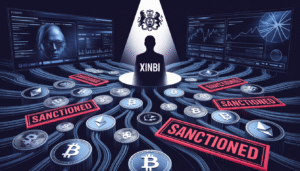

Binance typifies the resurgence and downfall of digital currencies. Established as one of the world’s largest digital asset exchanges and as one of the fastest-growing companies in 2017, Binance has helped millions of individuals buy and sell digital currencies.
However, Binance’s rapid growth has drawn the attention of regulators. Various countries have raised questions about Binance’s compliance with international sanctions, anti-money laundering policies, and other regulations. This has caused regulators globally to attempt to regulate the cryptocurrency industry.
The impact of all these actions could be enormous. The outcome of this investigation will have lasting consequences for both Binance and the future of the cryptocurrency market. This includes how rules and regulations governing digital currencies are developed and how they relate to future banking operations.
The objective of the article will be to provide an overview of:
- How Binance’s regulatory issues originated.
- Definition of what sanctions violations mean in relation to digital currencies.
- The status of Binance’s ongoing investigations and the current allegations against them.
- The potential legal, economic, and political impact of the investigation on the future of the cryptocurrency market.
- Possible penalties if found that Binance violated any laws.
- How the outcome of either investigation may impact future banking.
Binance’s Rise: Speed, Scale, and Structural Ambiguity
Binance was launched in 2017, and after a period of explosive growth, it entered a largely unregulated market. In less than one year, they became the largest cryptocurrency exchange globally and have held that position for several years. The basis for their dominant position includes several key strategic advantages:
- Rapid expansion of product offerings (spot, derivatives, staking, NFTs)
- Accessible worldwide, usually with little or no KYC/AML to trade or perform these services
- Low cost of trading, which attracts both retail and institutional traders
- Agility, which allows it to adapt more quickly to changing market conditions and regulatory developments than its regulated competitors.
Along with these strategic advantages, they also leveraged an unconventional business model. They did not have a clearly defined headquarters for the first few years after their establishment. This allowed them to open multiple locations across different jurisdictions using a distributed model, enabling them to grow their business quickly. However, this structure had a significant downside:
Regulatory accountability was very diffuse, if not non-existent.
As regulators started monitoring crypto markets more closely, Binance’s previously successful model is increasingly at odds with global compliance standards.
The 2023 Enforcement Action: A Watershed Event
Binance reached a significant settlement with U.S. enforcement authorities, effectively becoming the first large-scale crypto exchange to be taken down and blacklisted in the U.S. for violating anti-money-laundering (AML) and sanctions laws.
Binance reached an agreement to pay approximately $4.3 billion in penalties. They admitted to violating and failing to implement policies and procedures related to anti-money laundering and sanctions.
After the settlement was reached, Changpeng Zhao, Binance’s founder, voluntarily left the cryptocurrency industry and pleaded guilty. He was sentenced to prison in January 2023.
Authorities alleged that Binance allowed users in sanctioned jurisdictions to access the platform. In addition, the enforcement agencies alleged that Binance failed to implement and adhere to appropriate Know Your Customer (KYC) procedures and that the platform supported and facilitated the movement of funds linked to criminal organizations.
Further, U.S. regulators stated that Binance had prioritized growth over compliance regulations and policies. This statement has been validated and reiterated to prosecute and convict other crypto companies in subsequent enforcement actions and investigations.
Regulators noted that the company had a broader cultural issue in its operational philosophy, prioritizing growth and market dominance over compliance obligations. Additionally, this case indicated that regulatory authorities’ approach to enforcement in the crypto space would change and demonstrate that all major crypto companies would be held accountable for their actions.
Legal Framework for Understanding Sanctions
Sanction violations may seem like an insignificant regulatory infraction; however, they occupy a unique position at the intersection of law, finance, and geopolitics.
Governments have imposed sanctions on certain countries, individuals, and entities to limit their ability to conduct financial transactions for reasons related to national security or international stability.
Sanction regimes tend to focus on specific countries of concern (e.g., North Korea, Iran) or on groups of individuals and organizations with ties to terrorism, weapons proliferation or illicit networks.
That means it is illegal for any financial intermediaries, including crypto exchanges, to facilitate transactions involving sanctioned parties. Compliance will require stringent identity verification, transaction-monitoring systems, and prevention-focused enforcement mechanisms to block access to such transactions.
In the crypto context, this responsibility is further complicated by the fact that all blockchain transactions are anonymous and borderless. Despite this complexity and regulators’ growing tendency to view exchanges as traditional financial institutions, sanctions violations will be treated with the same level of severity as those committed by other financial institutions (e.g., payment processors and banks).
Renewed Scrutiny: 2025-2026 Investigations
Following the announcement of the huge 2023 settlement, Binance has remained in the spotlight for ongoing scrutiny. Recent investigations have revealed that authorities are examining compliance issues to determine whether sanctioned entities have continued to use Binance. For example, if any Iranian entities continue to transact with Binance. Investigators are focused on both the volume of potentially sanction-violating transactions, which may reach billions of dollars, as well as the usage of internal compliance policies and governance procedures.
There have reportedly been allegations that internal compliance representatives had issued warnings about improper transactions and that management may not have taken the necessary actions to resolve these issues. This raises questions about the potential presence of systemic weakness within the organization despite Binance’s commitment to change.
Although Binance refutes these claims and maintains that it has significantly improved its compliance systems and cooperates with regulators, the continuation of these investigations indicates that regulatory authorities have concerns regarding Binance’s changes since the 2023 settlement and will closely monitor the company’s progress.
Violation of Sanctions in the Crypto Industry
Sanctions violations in the crypto space often don’t come about from one specific act but rather through different acts creating a pattern of compounding factors leading up to the eventual violation (e.g. technology loopholes and organizations not doing what they are supposed to).
People from sanctioned countries may try to access the restricted platforms through means such as Virtual Private Networks (VPNs) or by providing false identification. It’s generally expected that exchanges will have effective monitoring systems in place to track and prevent such actions. However, if the platforms have gaps in these systems, opportunities for illegal activity arise.
Secondly, if an exchange’s compliance infrastructure is weak, i.e., it does not have sufficient people, technology, or prioritization internally invested into it, then they will be unable to successfully identify problematic transactions (i.e., suspicious transactions).
Of even greater concern are scenarios in which an exchange ignores or deprioritizes internal compliance alerts to maintain a growing company or liquidity. These situations are very relevant to the allegations against Binance and highlight the many complexities surrounding the enforcement of sanctions in the world of decentralized finance.
Regulators’ Hard Line on Binance
Regulators’ focus on Binance is indicative of the broader global regulatory concern regarding cryptocurrencies and their potential to disrupt the global financial system. The cross-border nature of cryptocurrencies presents an attractive opportunity for criminals and other bad actors seeking to avoid the restrictions often imposed by traditional banks through sanctions.
As the scale of crypto markets continues to grow, so does the potential for these risks to manifest. By enforcing sanctions, regulators are motivated not only by legal reasons but also by national security reasons. Sanction enforcement is inherently linked to geopolitical strategies, and any platform that enables the circumvention of sanctions is seen as a potential security threat.
The Binance case is as much about whether regulators can impose traditional financial regulations on new technologies as it is about anything else.
Consequences of Binance Being Found Guilty Again: Possible Fines and Criminal Charges
If Binance were found to have committed another sanctions violation, it would face serious penalties across several areas. Financially, this could mean hundreds of millions, potentially billions, in penalties due to additional fines imposed by the courts.
A company may be required to return profits from prohibited transactions and may face additional penalties, including criminal prosecution by the government and actions taken against individual executives and employees.
Companies subject to sanctions also face operational restrictions imposed by regulators, including limitations on operating in certain jurisdictions, revocation of existing licenses and restrictions on access to the banking system. This is necessary for them to conduct fiat transactions.
The company will likely be subject to extended periods of oversight, including independent monitoring and may undergo structural changes, such as restructuring all company operations as a single regulated entity or changing the company’s existing management structure.
Market and Business Effects Beyond Penalties
While new sanctions may not be forthcoming, the ongoing investigations will significantly impact Binance’s ability to conduct business successfully. Trust is a basic element of all financial service providers. Prolonged regulatory investigations may undermine user confidence and cause users to withdraw funds or decrease their trading activity on Binance’s platform. Additionally, institutional partners such as banks and other financial institutions may become more conservative in their dealings with Binance. This can result in reduced operational flexibility.
Competitors have a unique opportunity to utilize this regulatory uncertainty to their advantage. Many have already invested substantial amounts to meet compliance requirements and can differentiate themselves as safer alternatives. These specific dynamics illustrate that the effects of regulatory compliance extend well beyond regulatory penalties and influence both the competitive environment and the long-term prospects of the affected and market participants.
The Change in Structure: Compliance Takes Precedence Over Growth
Binance’s problems are representative of a much larger change occurring across the entire cryptocurrency ecosystem. When the crypto industry was in its infancy, it was marked by explosive growth and regulatory arbitrage, as companies established operations in different locations around the world to avoid scrutiny.
As governments now work together to enforce regulations and provide legal guidelines, the previous practice of operating across multiple jurisdictions to avoid oversight is no longer viable.
All exchanges are now required to adopt a compliance-first focus. This has a significant impact on how much money will be spent on building a robust legal infrastructure, implementing systems to monitor regulatory compliance, and engaging with all relevant regulatory bodies.
Binance is being forced to change its core business model, as it must weigh its historical focus on innovation and accessibility against the implications of operating in a heavily regulated environment.
The Tech-Regs Conflict
The heart of the Binance case is really a broader conflict between two concepts: decentralization, embodied in the blockchain and regulation, typically involving traditional enforcement. Blockchain technology enables a fully transparent system in which all transactions are publicly recorded and traceable; therefore, it can help with compliance.
However, new technologies, such as privacy-enhancing technologies (PETs) and decentralized exchanges (DEXs), are creating challenges for regulators because they don’t fit into the paradigm of traditional enforcement.
This creates a complex regulatory environment in which both regulators and companies operating in crypto need to adapt.
The outcome of the Binance investigation will be a stepping stone towards understanding how to balance the principles of decentralization and regulation and whether the crypto industry can continue to operate under the same principles while still complying with regulation.
Geopolitical Stakes and Worldwide Outcomes
Sanctions enforcement has geopolitical characteristics by nature. Therefore, investigations involving major financial platforms such as Binance have implications beyond economic effects. For example, if Binance were discovered to have facilitated transactions with countries and entities under sanction, this could weaken international sanctions compliance throughout the world and create challenges for global diplomatic relations.
As such, the value of this investigation extends beyond a purely corporate compliance issue. It is an issue of global financial governance, and as a result, the government will likely take this case very seriously due to its possible ramifications on international relations and security.
Future Scenarios: What Comes Next
The outcome of ongoing investigations into Binance could take several forms. If no significant new violations are found, the company may emerge with its position strengthened, having demonstrated its ability to adapt to regulatory demands. If minor issues are identified, it may face additional fines and oversight while continuing to operate largely as before.
However, if major violations are confirmed, the consequences could be transformative, leading to severe penalties, operational restrictions, and potentially a reconfiguration of the company’s structure. Such an outcome would likely accelerate the broader trend toward full regulatory integration of the crypto industry.
Binance has drawn attention amid an ongoing investigation into possible violations of sanctions which is a crucial opportunity for cryptocurrency to mature. The problems associated with putting a developing, decentralised technology into the confines of a traditional global finance structure are magnified in the case of Binance. The pressure on Binance from this investigation will affect all three areas of its business- legally, financially, and socially. It represents an important juncture for the cryptocurrency industry.
For example, how regulators apply regulations in the coming years will be a major factor in how other innovative technologies operate in conjunction with, and in adherence to, the regulations that govern the global financial system. One key takeaway from this saga is that the time of operating on the fringes of regulation within the cryptocurrency space will end, and the future of the cryptocurrency industry will be dictated by its success in establishing itself as a partner in, rather than a competitor to, the global financial system.